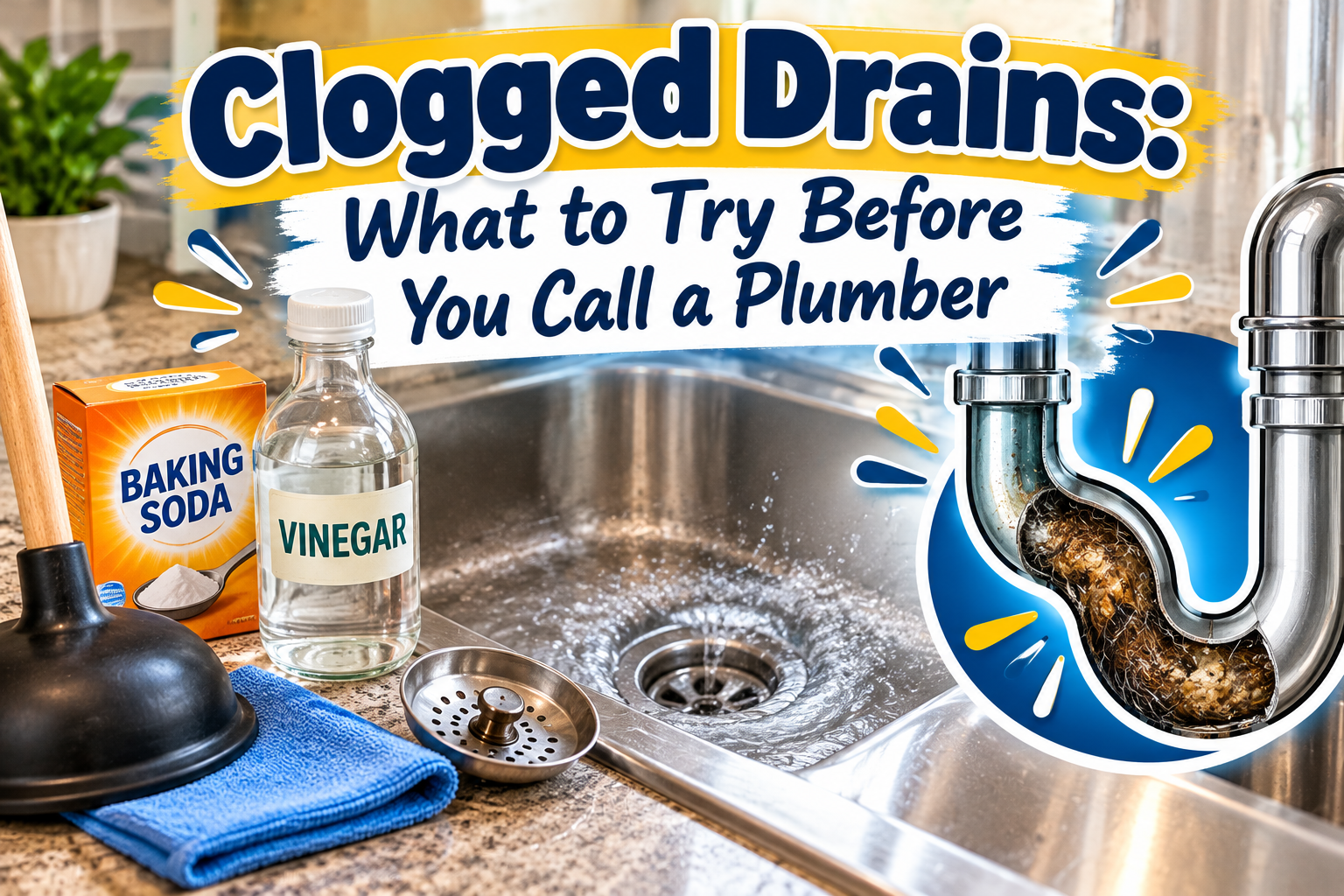
Clogged drains are one of the most common plumbing problems homeowners face. Whether it is a slow-draining sink, a backed-up shower, or a toilet that just will not flush properly, the frustration builds quickly. For many people, the first reaction is to pick up the phone and call a plumber. While professional help is sometimes necessary, there are a few simple steps you can try first that may solve the problem and save money.
One of the best tools for clearing a clog is a drain snake. Sometimes called a plumber’s auger, this flexible tool is designed to reach into pipes and physically remove whatever is blocking the flow of water. Unlike chemical drain cleaners, which can damage pipes over time, a drain snake is safe and reusable. It is inexpensive, available at most hardware stores, and often solves the problem within minutes.
A drain snake is one of the simplest and most effective tools a homeowner can use before calling in a plumber.
For a basic clog caused by hair, soap scum, or food debris, a snake is often all you need. Insert it into the drain, rotate it to catch or break up the blockage, and pull the material back out. Even if it takes a couple of tries, this method is far less costly than a service call and is usually just as effective for minor issues.
However, not all clogs are simple. If the drain continues to back up after repeated attempts with a snake, it may be a sign of a deeper problem. Tree roots can invade underground sewer lines, creating blockages that no small tool can clear. Old, corroded pipes can collapse or narrow, restricting water flow in ways that require professional repair. In some cases, recurring clogs are symptoms of a larger plumbing system failure rather than just a local obstruction.
Knowing when it is a do-it-yourself job and when to call a professional makes a big difference. If a single sink or shower is clogged, and the issue is new, it is worth trying the snake first. If multiple drains in the house are backing up at the same time, that usually points to a larger sewer line issue that requires professional equipment and expertise. Similarly, if foul odors or gurgling noises come from drains, it is often a sign of a problem further down the line.
Chemical drain cleaners are widely advertised as quick fixes, but they are not the best option for most homes. While they may provide temporary relief, they often do not clear the clog completely. The harsh chemicals can also corrode pipes, especially in older homes with metal plumbing, and they pose safety risks if handled incorrectly. Mechanical solutions like a drain snake are safer and more reliable.
Regular maintenance can also prevent clogs from becoming a constant nuisance. Using drain strainers in sinks and showers helps keep hair and food particles out of the pipes. Avoiding grease or oil disposal down kitchen drains is another simple step that prevents buildup. Even with good habits, though, clogs can still happen, which is why knowing the right first steps matters.
Clogged drains can range from simple annoyances to signs of bigger problems, but homeowners who start with the right tools and a little know-how can often save time, stress, and money. By keeping a drain snake on hand and learning when to handle it yourself versus when to call in a professional, you can take control of one of the most common plumbing issues without unnecessary expense.