When a plumbing issue comes up, one of the first questions on a homeowner’s mind is, “How much is this going to cost me?” It is a fair question, and it is also one of the most confusing parts of hiring a plumber. Many people assume that flat-rate pricing is the safest way to go. On the surface, a flat rate seems predictable and easy to budget for. But there is more to the story, and understanding the difference between flat-rate pricing and time-based pricing can make a big difference in how much you pay.
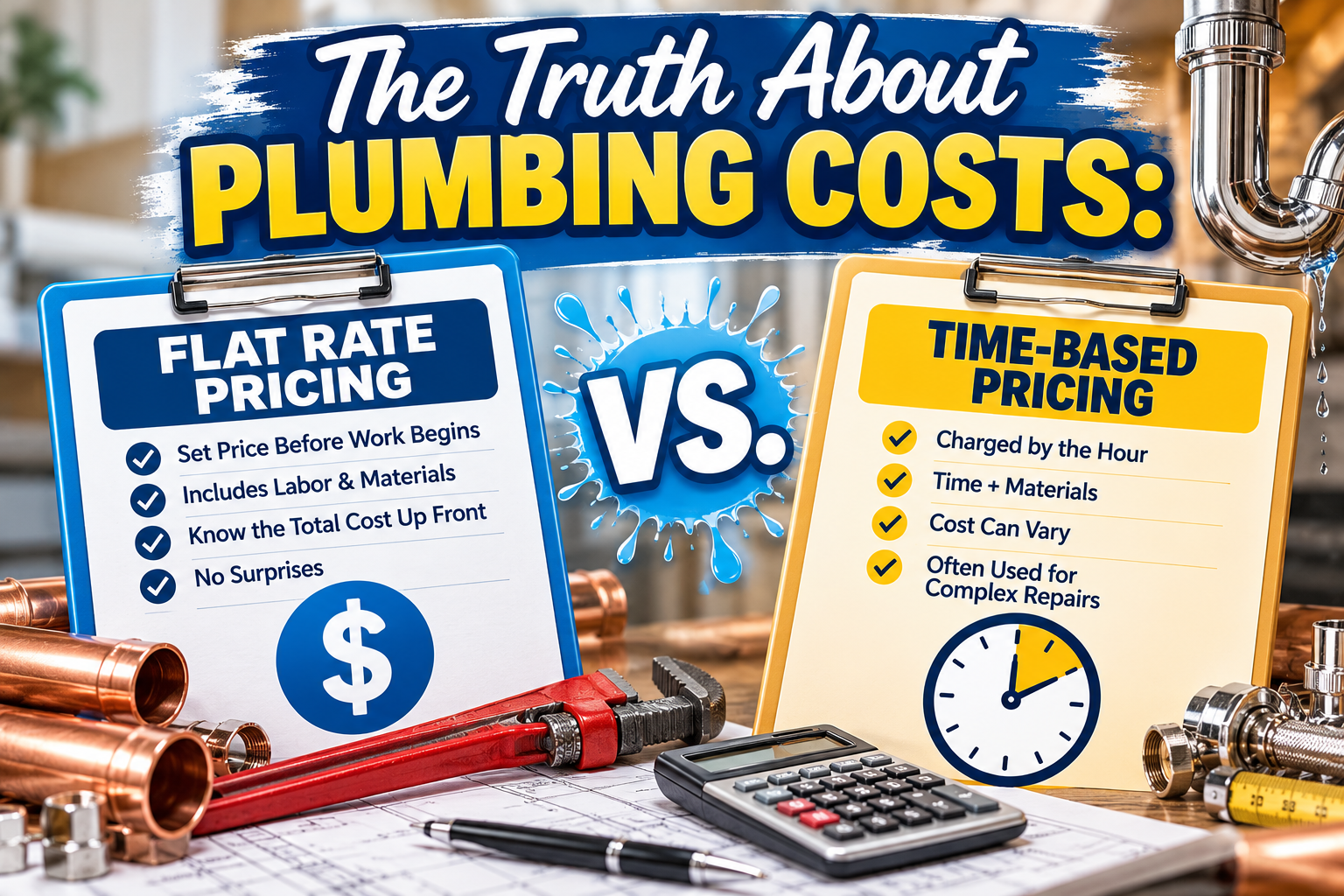
Flat-rate pricing is popular because it offers certainty. The plumber quotes a price for a specific job, such as unclogging a drain or replacing a water heater, and that price does not change. Homeowners like the peace of mind that comes with knowing the bill upfront. But what many people do not realize is that flat-rate pricing often includes built-in buffers. Plumbers calculate these rates with extra time factored in, since they cannot predict how smoothly the job will go. You may end up paying for hours of labor that were never actually needed.
Flat-rate pricing may feel predictable, but it often means paying for time you do not use.
Time-based pricing works differently. Instead of quoting one set number, the plumber charges for the actual time spent on the job, often in smaller increments like quarter-hours. If the plumber works efficiently and the problem is straightforward, the bill reflects that. In many cases, this model can save money because you are only paying for the work that was truly done, not for hypothetical setbacks that never occurred.
Another factor to consider is how prepared the plumber is when they arrive. A plumber who charges by the hour or quarter-hour but comes ready with the right tools and parts can often get the job done faster. Efficiency benefits the homeowner directly under a time-based model. With flat-rate pricing, however, there is no incentive for speed. The cost is already locked in, and whether the repair takes 30 minutes or three hours, the price is the same.
That said, flat-rate pricing is not always a bad thing. For large, complex projects that carry more uncertainty, a flat rate can give a sense of stability. If a water heater replacement runs into unexpected issues, for example, the homeowner will not be hit with a much larger bill. The trade-off is that you may pay a little more overall to cover the “just in case” situations built into the estimate.
So, how should homeowners think about plumbing costs? It helps to understand the nature of the repair. For straightforward jobs, time-based pricing can often be the most fair and economical. For more complicated or unpredictable projects, a flat rate may be worth the added security. In either case, the most important step is to have a clear conversation with the plumber before the work begins. Ask how they calculate costs, whether they charge in smaller increments of time, and whether there are service fees or trip charges added on top of the labor.
Transparency is what really matters. A reputable plumber will explain their pricing model and provide a written estimate before beginning work. That way, there are no surprises when the final bill arrives.
For homeowners, the key takeaway is that cheaper does not always mean better, and more predictable does not always mean fairer. Pricing structures are tools, and like any tool, their value depends on how and when they are used. Understanding the pros and cons of flat-rate versus time-based pricing helps you make informed decisions and avoid overpaying for routine plumbing work.